












卢遂显 量子与经络
一、1979年北京国际高能物理会议回忆
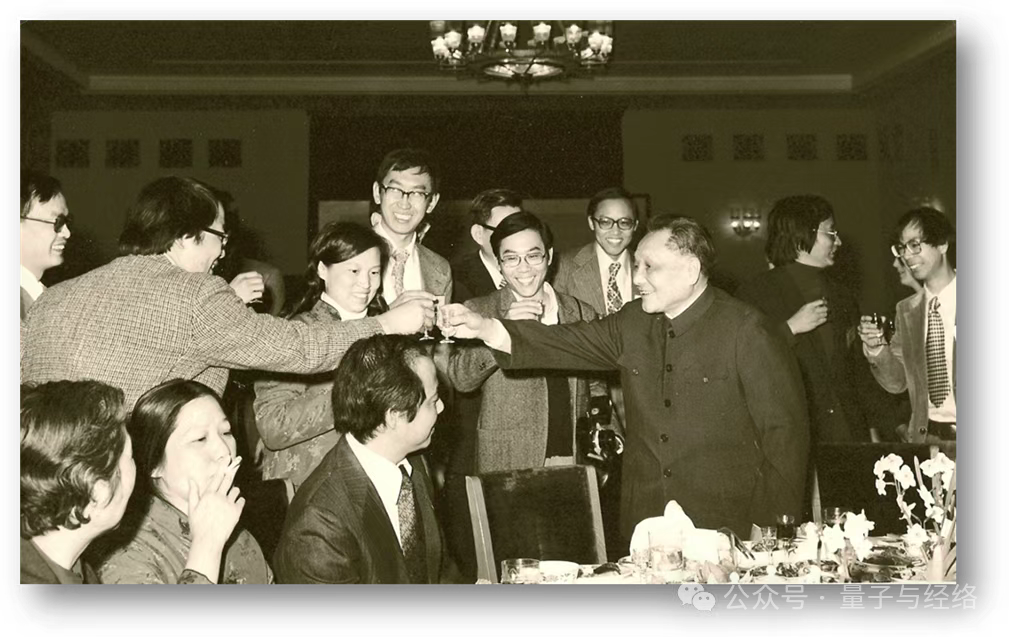
1979年,邓小平亲自倡导召开了第一届国际高能物理学会议(International Conference on High Energy Physics, Beijing),标志着中国重新走向国际物理学舞台。



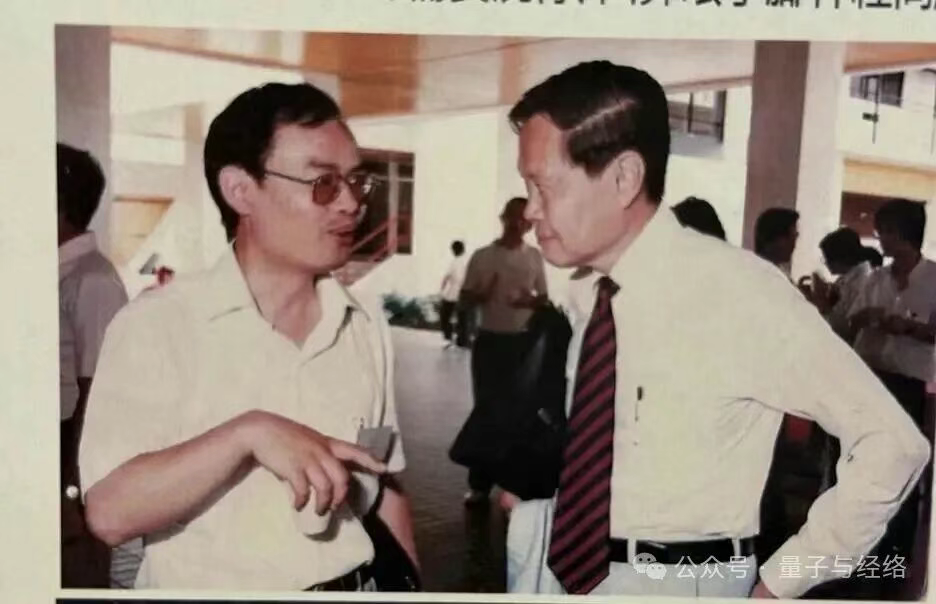
杨振宁教授、李政道教授、我本人以及上百位国内外著名物理学家应邀出席。会议期间,我与杨教授讨论了夸克模型(quark model)。我指出,按照经典杨–米尔斯理论(Yang–Mills theory),夸克无法被禁闭(cannot be confined)。杨教授听后十分感兴趣,立即邀请我作一次临时特别报告。
李政道教授全程聆听,会后提出了一个包含标量粒子(scalar particle)的夸克禁闭模型(confined quark model)。这段交流体现了1979年会议上浓厚的学术氛围与思想碰撞。
1. The 1979 Beijing International Conference on High Energy Physics
In 1979, Deng Xiaoping initiated the first International Conference on High Energy Physics in Beijing, marking China’s return to the world stage of physics.
Professor Chen-Ning Yang, Professor Tsung-Dao Lee, myself, and over a hundred distinguished physicists attended. During the conference, I discussed the quark model with Professor Yang. I pointed out that, according to classical Yang–Mills theory, quarks cannot be confined. Yang became intrigued and immediately invited me to give a special unscheduled talk.
Professor Lee listened attentively. Later, he proposed a confined quark model involving a scalar particle. This discussion reflected the intellectual vitality of that historic meeting.
二、关于π介子分布的讨论与启发
有一次,在杨教授登机前的短暂时间里,我们见面并讨论了高能强子碰撞(high-energy hadron collision)中心区的多重π介子分布(multiple π-meson distribution in the central region)。
我从这次交流中获益良多,并发表了一篇论文,提出中心区的π介子分布遵循爱因斯坦–玻色分布(Einstein–Bose distribution)。
2. Discussion on the π-Meson Distribution
Once, shortly before Professor Yang boarded a flight, we met and discussed the multiple π-meson distribution in the central region of high-energy hadron collisions.
That conversation greatly inspired me. I later published a paper proposing that the π-meson distribution in the central region follows the Einstein–Bose distribution.
三、在石溪理论物理研究所的学术交流
应我的请求,杨教授三次邀请我到纽约州立大学石溪分校(Stony Brook)理论物理研究所访问。
一次访问中,我向他介绍了自己关于经典杨–米尔斯规范理论(classical Yang–Mills gauge theory)的讨论。我指出其中的解有虚部(imaginary part)。杨教授立刻回应,认为虚部解是不具物理意义的(unphysical),因此没有实际用途。他的批评尖锐而严格,体现了他一贯的科学精神。
3. Academic Exchange at Stony Brook At my request, Professor Yang invited me three times to his Institute for Theoretical Physics at the State University of New York, Stony Brook.
During one visit, I told him that a solution in my discussion of classical Yang–Mills gauge theory contained an imaginary part. His immediate response was that the imaginary solution was unphysical and thus not useful. His comment was sharp, critical, and uncompromising—true to his rigorous scientific style.
四、关于高能物理方向与学术转型的讨论
杨教授曾指出,外界误解了他“不鼓励年轻中国物理学家从事高能物理”的意思。他真正的观点是:高能加速器越来越大、越来越贵,但重大成果却越来越少。
他举例说,瑞士的大型强子对撞机(LHC)虽然取得了发现希格斯玻色子(Higgs boson)的成果,但除此之外,重要发现极少。近二十年,大量青年才俊投入弦论(string theory),但未有可验证的实验结果。暗能量与暗物质的新发现,也非弦论所预言。
受此启发,我转向创建量子中医学(Quantum Chinese Medicine),以量子物理诠释古代中医的深层机理。
4. On High-Energy Physics and Scientific Transformation
Professor Yang once explained that people misunderstood his view about discouraging young Chinese physicists from high-energy physics. His real point was that accelerators had become larger, more expensive, and less productive in discoveries.
He cited the Large Hadron Collider in Switzerland—despite vast cost, it yielded only one major finding, the Higgs boson. For decades, many brilliant physicists pursued string theory, yet it produced no verifiable experiments. Dark energy and dark matter were neither predicted nor explained by it.
Inspired by his reasoning, I turned toward developing Quantum Chinese Medicine—a field uniting quantum physics with the profound logic of traditional Chinese healing.
五、关于“几何图像”高能散射模型的研究
除了在基础理论物理上的成就外,杨教授还提出了高能散射(high-energy scattering)的“几何图像”(geometrical picture)模型。
第一篇论文完全无参数(parameter-free),预测精度高达10⁻¹⁴,堪称奇迹。我受其启发,编辑出版了《强子散射中的几何图像》(Geometrical Pictures in Hadron Scattering)一书,以总结与延伸这一研究方向。
5. On the “Geometrical Picture” of High-Energy Scattering
Beyond fundamental theoretical work, Professor Yang also published a series of phenomenological models on high-energy scattering known as the “geometrical picture.”
His first paper was parameter-free yet achieved predictive accuracy of one part in 10¹⁴. Inspired by his approach, I edited a book titled Geometrical Pictures in Hadron Scattering to continue and expand this line of thought.
六、在新加坡会议上的再会
在他九十多岁时,杨教授携夫人赴新加坡出席会议,并演讲回忆芝加哥大学求学时期。
他风趣地说,自己最初想学实验物理(experimental physics),因为“实验是物理的基础”。但他笑言:“Where there is a bang, there is a Yang.”——只要有爆炸,就有杨。他的实验屡屡失败,只得转向理论物理,从此成就卓著。
我也受邀参会,并报告了两项量子中医学(Quantum Chinese Medicine)高科技发明,用于提升自闭症儿童的自我修复能力(self-healing ability)。这次相遇象征着东方智慧与现代科学在新世纪的再度汇合。
6. Reunion at a Singapore Conference In his nineties, Professor Yang attended a conference in Singapore with his wife and spoke about his graduate years at the University of Chicago.
He humorously recalled that his first choice was experimental physics, because “experiment is the foundation of physics.” But he added, “Where there is a bang, there is a Yang”—a reflection on his repeated lab mishaps that pushed him toward theory.
I was also invited to that conference and presented my work on two high-tech inventions in Quantum Chinese Medicine that enhance the self-healing ability of autistic children. It was a meaningful reunion—where East and West, tradition and modern science, met again.
七、关于杨李合作的观察
在我看来,杨振宁与李政道的合作极为富有成果。他们共发表了三十余篇论文,这在科学史上极为罕见。
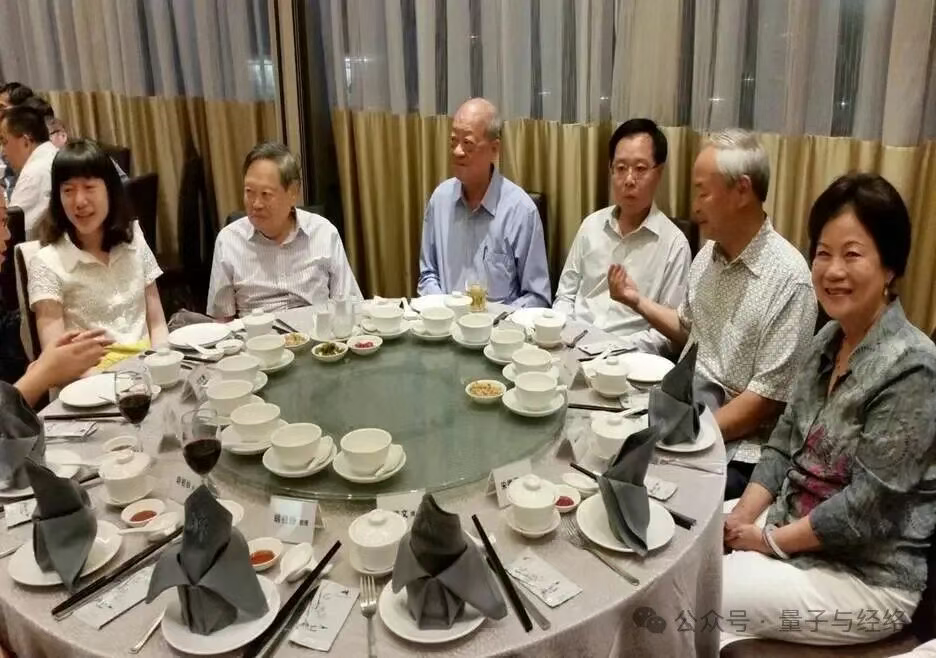
依我个人的观察,在物理、化学、医学或社会科学等领域,两位同样显赫的科学家之间的合作通常只产生一篇共同论文。从这个意义上说,杨与李的合作堪称奇迹。 我曾在一次晚宴上亲眼见到,李政道情绪激动,几乎要发作,其夫人轻声说了几句,他便平静下来。这种相互包容,正源自他们对中华文化的共同认同与深厚情感。
7. On the Collaboration Between Yang and Lee
In my view, the collaboration between Professor Yang and Professor Lee was extraordinarily fruitful—they co-authored more than thirty papers, a rarity among scientists of equal eminence.
In my personal observation, collaborations between two equally prominent scientists in physics, chemistry, medicine, or social sciences usually result in only one joint paper. In this sense, the partnership between Yang and Lee was exceptional.
I once witnessed during a dinner that Professor Lee was visibly upset; his wife gently spoke to him, and he calmed down. Their mutual tolerance, I believe, arose from their shared appreciation of Chinese culture.
八、对杨振宁教授晚年思想的理解与共鸣
杨教授在晚年曾说,他一生最重要的贡献,不仅是科学理论,而是让中国人更有信心——让中国人相信自己也能登上科学的巅峰。
这种精神深深影响了我。受杨教授的启发,我致力于将物理学与中医学结合,用量子物理解释古代中医中那些“不可思议却真实有效”的现象。杨教授给予我们的,不仅是知识,更是一种文化的自信与科学的使命感。
8. Reflections on Professor Yang’s Later Thoughts In his later years, Professor Yang said that his greatest contribution was not merely in theoretical physics, but in giving Chinese people greater confidence—the belief that they too could stand at the summits of modern science.
That belief has profoundly influenced me. Inspired by him, I have devoted myself to integrating physics and Chinese medicine, using quantum theory to explain the seemingly incredible yet effective principles of ancient healing.
What Professor Yang gave us was not only scientific knowledge, but also confidence, courage, and a sense of purpose.
卢遂显博士
2025年10月30日
美国